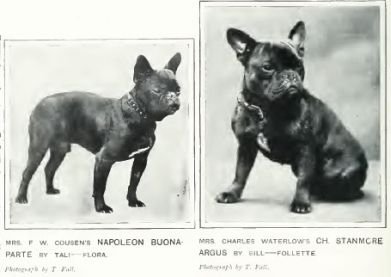
History of the French Bulldog
In the early 1800’s, all blood sports including bull baiting and dog fighting were officially banned in England, and suddenly all the dogs previously bred specifically for fighting had no place in society. Many breeders began repurposing these former fighting dogs to other functions, slowly breeding out their blood instincts, making them smaller and more people friendly. By 1860 the miniature English bulldog had emerged as a breed in its own right; a mixture of the larger English bulldog breeds (separate from the British Bulldog or Bull Terrier), plus terrier genes, pug bloodlines, and crosses with the local ratting dogs. These miniature bulldogs became a family dog, and the protector of children and babies in an era when rats were known to chew the toes off sleeping infants and carried diseases such as the Black Death.
In the Beginning
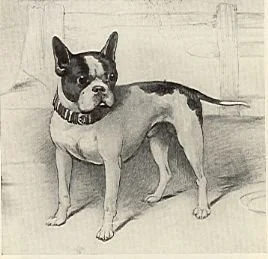
As the Industrial Revolution gained momentum, and people started living in increasingly smaller spaces, these miniature bulldogs became highly sought after. Small enough to thrive in close quarters, they were still ferocious enough to protect both the home and family. Miniature bulldogs became quite popular with the emerging lace workers of England, often young, single women living alone or in small groups. The miniature Bulldog was the perfect dog for their needs.
When increasing levels of industrial mechanisation made large numbers of lace workers in England redundant, many migrated to France, where their jobs were still secure. They took their little miniature bulldogs with them. With increasing demand for pups, many English breeders of the miniature bulldog began exporting their “reject” puppies on into France, mostly those dogs with the undesirable pricked ears, rather than the folded over “rose” ears that was the standard for all Bulldogs at the time. Such was the popularity of the dogs being sent into France, that by the turn of the twentieth century the Miniature Bulldog of England had all but become extinct. Throughout the second half of the nineteenth century, the French continued defining the characteristics of their miniature bulldogs, and soon they diverged from their English forebearers and becoming a breed distinctly their own, initially called the “Bouledogue Francais”, which literally means “Bull Dog of France”.
Defining the breed
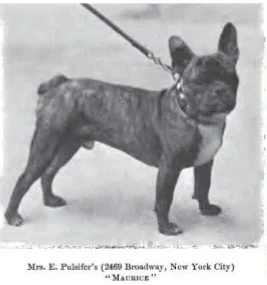
The Breed Standard for the French Bulldog didn’t become a separate entity until 1902, after the French Bulldog breeders of America staged a revolt when their prick-eared miniature bulldogs were unfavourably judged in 1896. They formed their own breed club and developed a breed standard for their “French Bulldogs”, as separate from the miniature bulldogs of England and other breeds, affirming their upright, batlike ears as correct. Other countries followed suit after America, including France and Germany, but it took England a little longer to recognise the French Bulldog as a separate breed (mostly after pressure from the English miniature bulldog breeders, who protested against these “prick eared” dogs being allowed to breed with their own stock).
So, the French Bulldog emerged as a distinct breed just over a century ago,
making it one of the newer dog breeds in the world.
Developing a Breed Standard
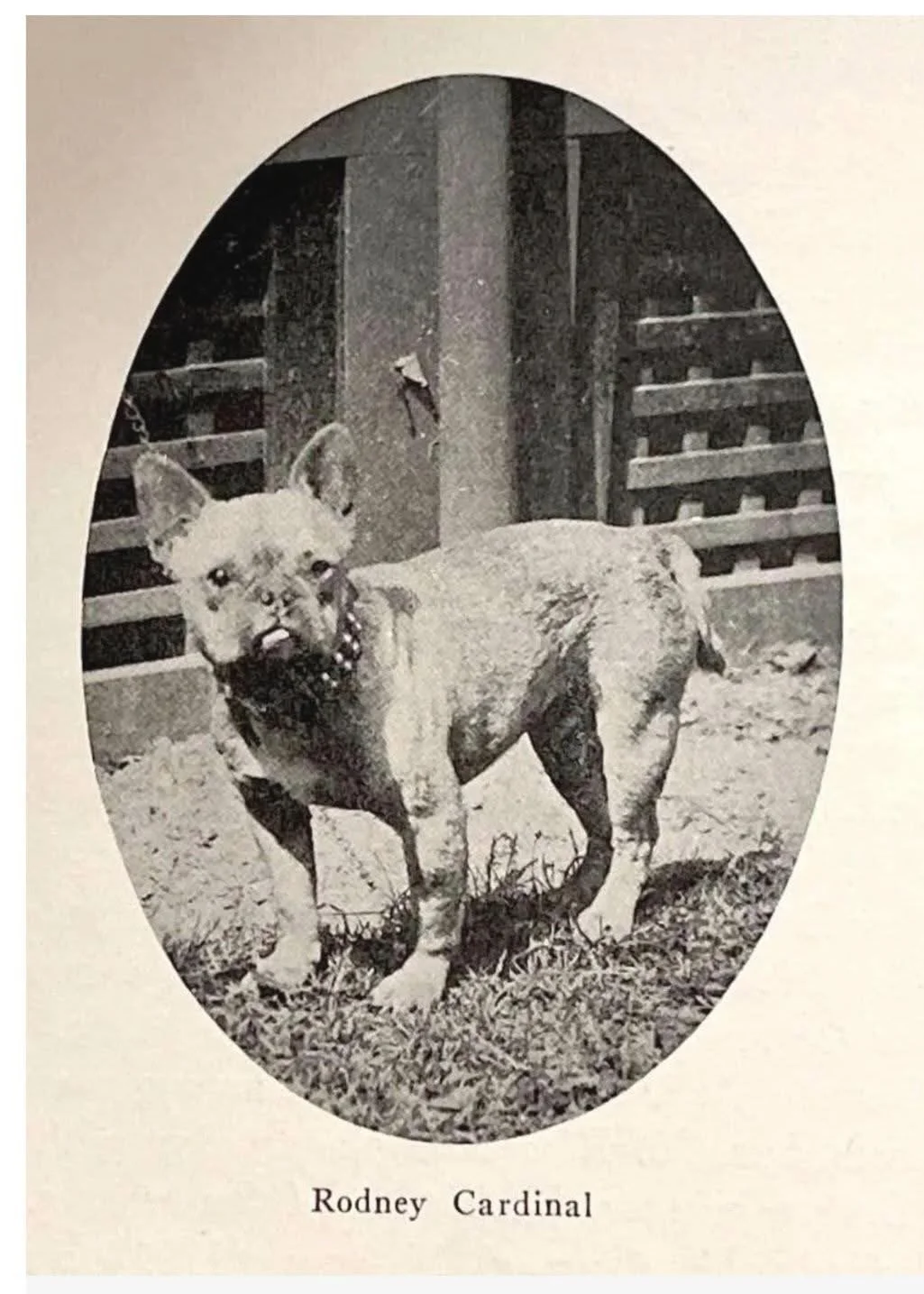

For more than a century the French Bulldog has been a compact and muscular little dog, capable of great speeds over short distances and living their best life in the homes of the emerging middle class. Their shape was far less extreme than it often is today, with their head and shoulders in proportion to their rump, plus a length of spine appropriate for their size, and visibly slender legs and a short but well-defined muzzle. With the advent of modern veterinary medicine, this has allowed for a sharp change to the shape of the French Bulldog. Their heads and shoulders have become so large and their hips so narrow, that for most dogs a caesarean is necessary to give birth (and often artificial insemination to become pregnant). The muzzle of so many French Bulldogs has become so short as to be practically non-existent, with their nose seemingly welded to their cheeks, which has proven devastating to their breathing ability. The modern French Bulldog we see today simply could not have survived to breed in the early twentieth century. Breeding any dog to extremes is not a sustainable practice, and governments across the globe are starting to impose regulations to improve the health of French Bulldogs. In Australia, breeders like ourselves are trying to get in front of the curve, and improve the French Bulldog before it’s imposed on us from the outside. The time has come for the Frenchie to return to what it was in 1902, before they go the way of the English miniature bulldog and are bred into extinction.
The changing face of Frenchies